
Moving fish create much of the appeal of underwater shooting games. Some cross open water, while others pass behind visual effects or travel through crowded parts of the screen. Readers searching for aiming guides with hawkplay can begin by separating observable movement from assumptions about rewards.
Following a fish more comfortably can improve your control of the interface. It does not establish when a capture will happen, and it does not make a target due for a payout.
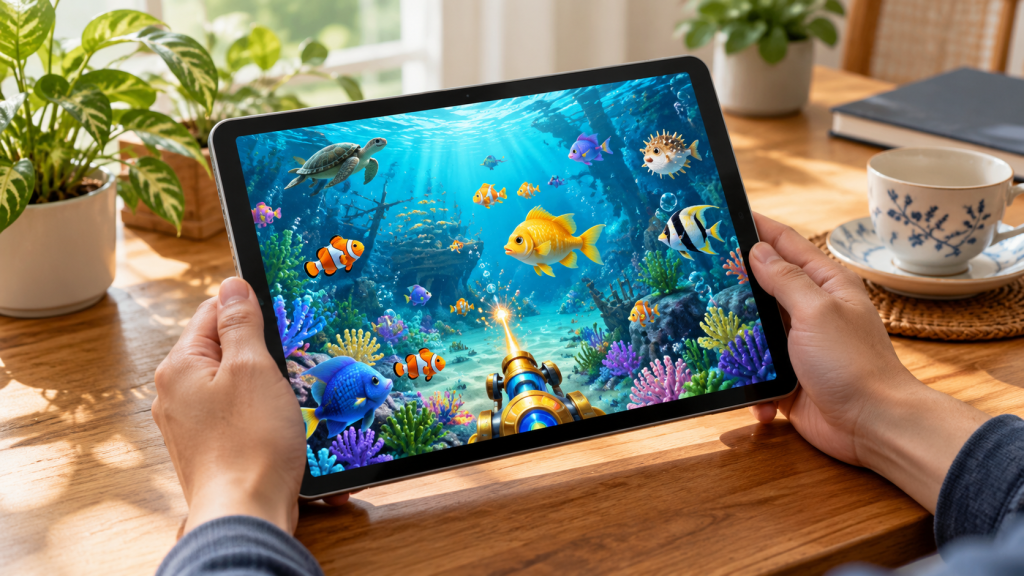
Observe Before Holding the Fire Button
Spend a moment watching the screen without shooting. Look at entry points, exit points, overlapping targets, and how quickly the cannon follows your input. These observations can help you decide whether the controls feel comfortable.
Avoid using a fixed rule such as small fish always move slowly. Different titles can animate different species in different ways. Describe what happens in the game you are actually viewing instead of assuming a universal pattern.
Understand What Your Input Controls
You may be able to change the firing pace or aim direction without changing how the fish move. Unless the rules explain a freeze, slow-motion, or similar feature, do not assume that firing more slowly controls the speed of the game world.
For readers browsing hawkplay results, this is a useful distinction: the pace of your inputs and the pace of target movement are separate questions.
| Visible situation | Useful check | Limitation |
|---|---|---|
| Fast-moving fish | Can you follow it comfortably? | Speed does not reveal capture odds |
| Overlapping targets | Is target selection clear? | Visual overlap may hide where shots land |
| Fish near an edge | Does the game support wall rebounds? | A border does not imply bouncing bullets |
| Dense fish group | Are multi-target effects explained? | A cluster does not guarantee extra rewards |
| Automatic firing | Can you stop it immediately? | Continuous input can increase spending |
Check Target-Lock and Group Effects
If a target-lock button exists, read whether it tracks a selected fish, changes aiming behavior, or has another purpose. It should not be described as increasing capture probability unless the published rules explicitly support that statement.
The same applies to group effects. Some visual effects may look as though they touch several fish, but appearance alone is not enough to establish how rewards are awarded.

Be Careful with Rebound Techniques
Advice to shoot a wall and then fire directly at a fish depends on mechanics that may not exist in your chosen game. Check whether projectiles rebound, remain active, or interact with multiple targets before experimenting.
Any aiming tip found through hawkplay should identify the rules it depends on. Without those rules, a rebound story is an unsupported prediction rather than a reliable technique.
Frequently Asked Questions
Can I tell that a fish is about to be captured?
Not from movement alone. Use only information the game expressly supplies about target state or capture mechanics.
Is shooting into a group always better?
No. The effect depends on the title’s projectile and reward rules, and shots still have a cost.
Aim with a Clear View of the Rules
Observe movement, learn how the controls respond, and avoid firing continuously when the screen becomes confusing. Readers continuing their research with hawkplay should keep visual timing separate from claims about guaranteed rewards.