
Before opening a slot, decide what the session can cost. This hawkplay guide uses Crazy FaFaFa as the context for understanding stake size, spending limits, and the difference between a payout and a profit.
A budget is a spending boundary. It does not improve the game’s probabilities, create a winning system, or guarantee that a session will last for a particular amount of time. Its value is that you make the financial decision before results begin influencing your mood.

Confirm the Cost of One Paid Spin
Read the total stake displayed by the game. If the interface uses credits, confirm their value before comparing them with your budget. Do not assume that a prominent number represents the full amount charged.
After changing the stake, check it again. A small adjustment can materially change how much is spent across repeated spins, even when the individual difference appears minor.
Understand the Arithmetic of Stakes
The following examples are hypothetical and do not state the game’s available bet limits. They assume no winnings are returned and reused.
| Hypothetical budget | Stake per paid spin | Paid spins the budget could fund with no returns |
|---|---|---|
| ₱300 | ₱3 | 100 |
| ₱300 | ₱6 | 50 |
| ₱300 | ₱10 | 30 |
| ₱300 | ₱15 | 20 |
For hawkplay readers, the table shows exposure, not a recommendation to make every listed spin. You can stop before using the amount you set aside.
Set Three Boundaries Before Starting
A Spending Boundary
Choose an amount whose loss would not affect bills, savings commitments, or other essentials. Keep that amount separate from money reserved for daily life. Repeated top-ups can defeat the purpose of setting the original limit.
A Time Boundary
Decide when the session ends. A timer can make that decision easier to follow, especially when animations or rapid play make time less noticeable.
A Rule Against Chasing Losses
Do not raise the stake solely to recover money already lost. A larger wager increases the amount at risk on the next result; it does not reverse the earlier result.
Review the Whole Session
A payout can be smaller than the total spent to reach it. For instance, ₱80 in awards after ₱120 in stakes leaves a net loss of ₱40. Tracking both sides gives a clearer picture than remembering only the largest animation.
This hawkplay budget approach also applies after a win. Receiving an award does not require you to keep playing or increase the next wager. The remaining balance is still money that can be lost.
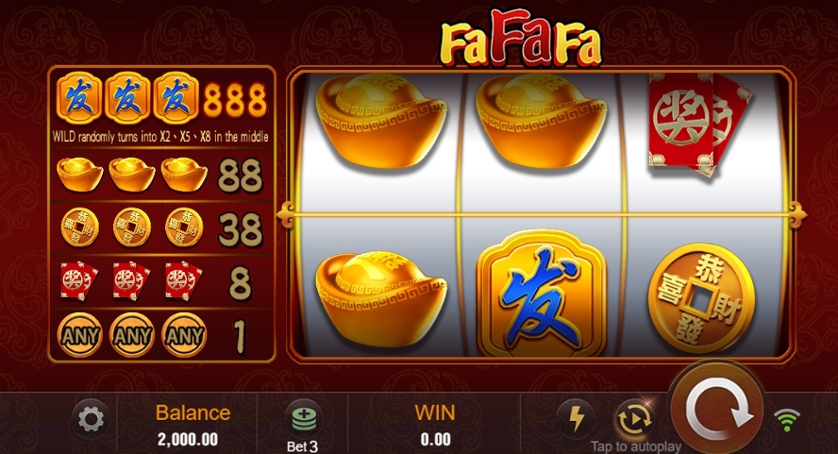
What About Automatic Play?
If automatic play is available in the interface, inspect its controls before enabling it. Do not assume a loss limit or stop condition exists unless it is actually shown. Convenience does not remove the need to track the total spent.
Manual play can make it easier to pause between results, but neither manual nor automatic operation should be treated as a way to improve the underlying outcome probabilities.
Conclusion
Clear stake information and firm boundaries make a session easier to evaluate. Use this hawkplay guide to plan spending before opening Crazy FaFaFa and to stop when the session no longer fits that plan.