
The 1-3-2-6 system assigns a number of betting units to four possible steps. It is usually presented as a way to structure a short run of wins. The first wager is one unit, followed by three, two, and six units if the required wins continue.
A player browsing baccarat on hawkplay should decide what one unit means in money before using the system. A unit of $5 and a unit of $50 create very different levels of risk.
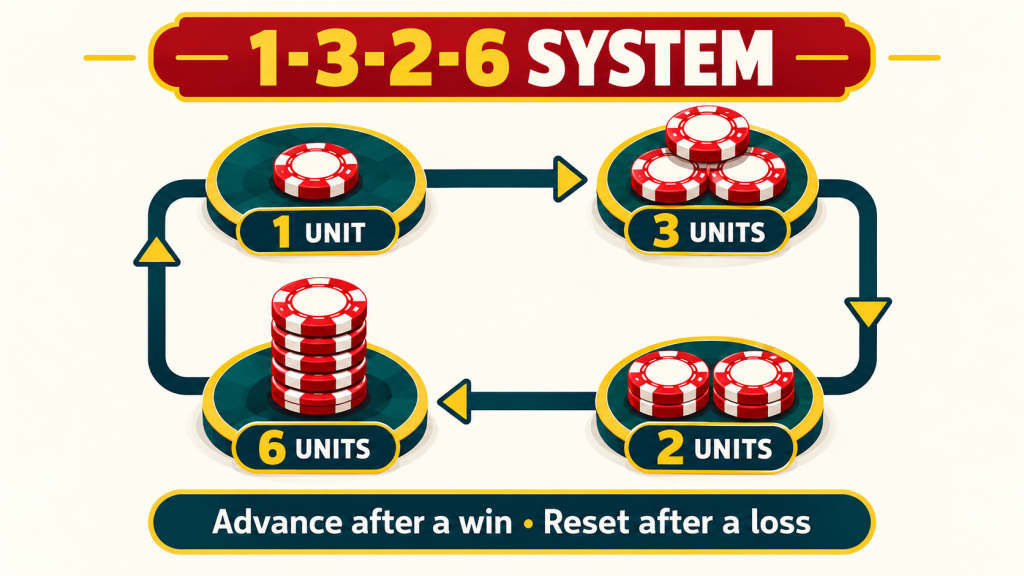
Example With a $10 Unit
| Step | Units | Wager |
|---|---|---|
| First | 1 | $10 |
| Second | 3 | $30 |
| Third | 2 | $20 |
| Fourth | 6 | $60 |
A player typically advances after a win and resets after a loss or after completing the fourth step. Individual baccarat payouts still matter: Banker commission, for example, means a winning Banker wager does not usually return a full one-to-one profit.
Why Players Use a Fixed Sequence
The main benefit is clarity. The next wager is decided before the round begins, reducing spur-of-the-moment changes. The drawback is that players may focus on completing all four steps even when a session has already reached its planned limit.
Before playing on hawkplay, compare every step with the table minimum and maximum. A $10 unit requires a $60 fourth wager, so the table must permit that amount and your budget must accommodate it.

Keep the Math Realistic
A sequence of wins is possible, but no betting system can make it happen on demand. A loss at any step should be treated according to the rule set in advance. Avoid extending the sequence to “make back” an earlier loss.
Try recording several practice rounds before using real money. This helps you see how often the sequence resets and how the wager sizes feel. If you play baccarat through hawkplay, decide on a total amount you can spend and stop when you reach it. The structure of 1-3-2-6 is useful for organization; the outcome remains uncertain on hawkplay.